Stuart Sleep
Categories
Health CarePHYSICIANSPHYSICIANS/CONCIERGE MEDICAL PRACTICEPHYSICIANS/SLEEP MEDICINE
Hours:
Consults: Mon–Fri 9:00 AM – 5:00 PM. Sat & Sun by appointment. Sleep studies are conducted overnight
Driving Directions:
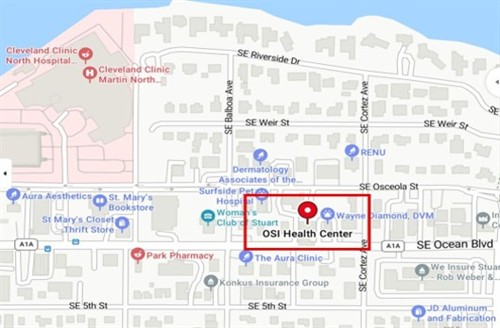
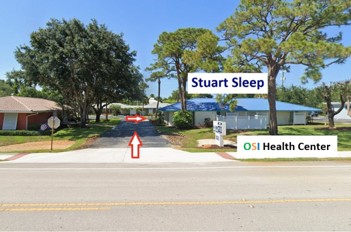
Nearly across the street from Cleveland Clinic Martin North Hospital on SE Ocean Blvd, just east of US-1. Look for signage for OSI Health Center.
About Us
Stuart Sleep is a private concierge sleep testing and treatment practice in Stuart, Florida, founded by Dr. Richard Herstein. The practice performs comprehensive overnight sleep studies, interprets them in full, and treats the sleep-disordered breathing it finds — including with POxT, a patent-pending therapy developed at Stuart Sleep for patients who cannot or will not use CPAP.
The practice was built around a specific observation. Sleep medicine in most of the country has become a volume business: several patients tested per night in a shared lab, raw data shipped to a remote reader who scores it against software-generated defaults, and a summary mailed to the referring provider weeks later. The patient often never speaks to the person who interpreted their study. When the result is a CPAP prescription and the patient can't tolerate the machine, there is frequently no next step offered at all.
Stuart Sleep inverts that model at every point.
The Clinical Model
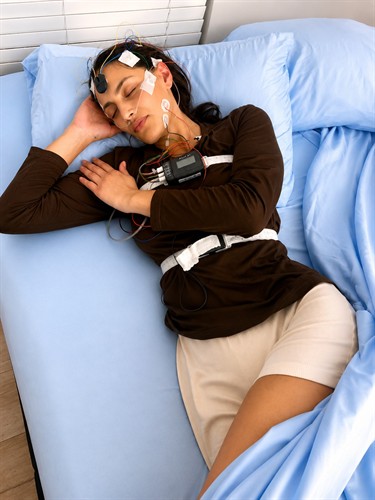
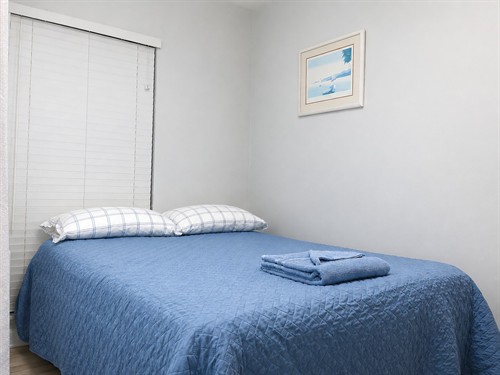
One patient per night. Studies are conducted in a private suite with one-on-one clinical monitoring throughout the night. Protocols are set for the individual patient rather than run from a standard template. No patient is one of a dozen studies running down the hall.
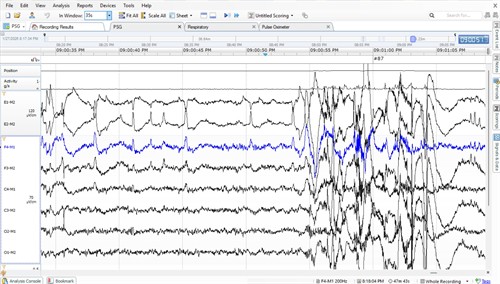
Epoch-by-epoch interpretation. Dr. Herstein reviews each study personally, in 30-second epochs, from beginning to end. Nothing is auto-scored and accepted, skimmed, or handed to a remote reader. Studies are scored to AASM standards. This is the practice's central methodological commitment and the reason it finds disease that prior testing missed.
Same-week results, explained directly. Findings are typically returned within a week and walked through with the patient in plain language — what the data shows, what it means, and what happens next. Patients leave understanding their own study.
Concierge, direct-pay pricing. Stuart Sleep operates outside insurance networks. Pricing is published, flexible payment plans are available, and no insurance authorization is required. This removes the referral-and-authorization delay that typically separates a symptomatic patient from a diagnosis, and it is what allows the practice to give each patient an entire night and an unhurried review.
Diagnostic Services
Comprehensive in-lab polysomnography. Full overnight studies capturing airflow, respiratory effort, oxygen saturation, EEG, EOG, EMG, ECG, body position, and snoring — the complete channel set required to characterize sleep-disordered breathing and stage sleep architecture properly.
Split-night and titration studies. When indicated, diagnostic recording and therapy titration are performed in the same overnight visit, reducing the number of nights a patient must spend in the lab.
Second-opinion reanalysis. Stuart Sleep re-reviews raw data from prior sleep studies — home sleep tests and lab-based polysomnograms alike, with or without CPAP, BiPAP, supplemental oxygen, oral appliance, or hypoglossal nerve stimulation titration. Patients who were told their study was normal but who remain symptomatic are a significant part of the practice. Home sleep tests in particular can underestimate disease: they measure fewer channels, cannot stage sleep, and cannot detect arousal-based events, so a patient with genuine sleep fragmentation can be told they are fine. Full reanalysis of the raw signal frequently changes the answer.
Therapy verification. Patients already on treatment can be restudied to confirm it is actually working — a step that is routinely skipped. Prescribing a therapy is not the same as demonstrating it resolved the disease.
POxT — Positional Oxygenated Therapy
POxT is a patent-pending therapy developed at Stuart Sleep. It combines positional therapy — controlling body posture to reduce airway collapse — with targeted oxygen delivery during the sleep phases where the patient is most vulnerable. Both components are set for the individual patient using their own overnight data, not applied from a generic protocol.
What the patient actually experiences
There is no mask. There is no headgear, no hose, and no pressurized air. There is no implanted device and no electrical stimulation. The patient wears a discreet nasal cannula and, aside from that, is largely unaware of wearing anything at all.
Because there is no mask and no pressure, the patient can eat, drink, and speak normally while the therapy is running. Patients who wake in the night are not sealed inside an appliance. For people who abandoned CPAP because of claustrophobia, mask leak, pressure intolerance, dry mouth, or the simple inability to fall asleep wearing it, this is usually the deciding difference.
Speed to treatment
POxT can typically begin within about two weeks of scheduling. Setup is usually accomplished in a single overnight visit — two if a diagnostic study is needed first. The therapy is titrated in the lab under direct observation, using the patient's own polysomnographic data, and it works from the first night. Patients generally notice a difference immediately rather than waiting through weeks of acclimatization or months of post-surgical activation and adjustment.
Range of application
In paired in-lab studies at Stuart Sleep, POxT has normalized AHI to below 5 in mild and moderate cases and reduced AHI by approximately 80% in severe cases, with oxygen saturation improving from nadirs as low as 70% to averages above 95%. More than thirty patients who had been prescribed CPAP have chosen POxT and report nightly use.
POxT is applied to both obstructive and central sleep apnea. This distinguishes it from oral appliance therapy, which is principally effective in mild disease and sometimes moderate, and from hypoglossal nerve stimulation, which is contraindicated in patients with a significant central component.
These figures are outcomes observed in a case series at Stuart Sleep — not a controlled trial, and not a head-to-head comparison against any other therapy. Individual results vary, and suitability is determined by diagnostic testing.
Ongoing burden
There is no nightly cleaning regimen. No mask to scrub, no headgear to launder, no hose to disinfect. The oxygen concentrator requires no scheduled maintenance for five years per the manufacturer's specification. Replacement nasal cannulas are inexpensive and supplied with the equipment. Total cost is substantially lower than CPAP with its ongoing supply replacement, oral appliance therapy with its dental fabrication and fittings, or surgical implantation with its eventual battery replacement procedure.
How POxT is prescribed
POxT is not sold as a device or dispensed on request. It follows a diagnostic sleep study, is titrated in the lab against the individual patient's data, and is verified by objective measurement rather than by the patient's impression. Where a patient still benefits from PAP therapy, Stuart Sleep offers combination approaches — POxT alongside CPAP or BiPAP — to improve results for patients who tolerate the machine but are not fully treated by it.
Other Therapies and Expertise
Stuart Sleep's clinical experience spans the full range of sleep apnea therapy, which is what makes an honest comparison possible: CPAP, BiPAP, adaptive servoventilation, supplemental oxygen administration, oral and mandibular advancement appliances, and hypoglossal nerve stimulation systems. Patients are not steered toward a single answer. The recommendation follows the data, the patient's anatomy and phenotype, and what the patient will realistically use every night — because a therapy that sits unused in a closet treats nothing.
Who Stuart Sleep Serves
Patients with symptoms and no diagnosis — snoring, waking gasping or choking, morning headaches, daytime fatigue, difficulty concentrating, unrefreshing sleep
Patients who were tested, told they were normal, and still feel unwell
Patients prescribed CPAP who cannot tolerate it, gave up on it, or use it inconsistently
Patients on therapy who want to know objectively whether it is working
Patients who want a diagnosis quickly, without a referral queue or insurance authorization
Patients seeking a CPAP alternative that addresses moderate and severe disease, not only mild
About the Founder
Dr. Richard Herstein is the founder and clinical director of Stuart Sleep. He is a committed and compassionate sleep specialist who brings together more than fifteen years of hands-on clinical experience and a distinguished international medical education.
His work in sleep began at the bedside. As a Registered Polysomnographic Technologist and Registered Sleep Technologist, he has personally performed and analyzed thousands of overnight studies — which is why he still reads every study epoch by epoch rather than trusting a software summary.
An Ann Arbor, Michigan native, he completed his undergraduate studies at the University of Michigan before earning an MBA from Indiana University's Kelley School of Business and a Master's in Healthcare Administration Management from Harvard University, with medical training at the Royal College of Surgeons in Dublin, RWTH Aachen University Medical School, and Windsor University School of Medicine. He is preparing for U.S. medical licensure boards to continue clinical training in Internal Medicine and related subspecialties, including Sleep Medicine.
Before founding Stuart Sleep, he spent a decade leading large hospital systems, most recently as Chief Medical Officer and Chief Hospital Administrator for the State of Florida's entire behavioral health hospital system — overseeing care for more than 3,500 patients across eight hospitals and leading approximately 4,500 clinical and support staff. Throughout, he was an advocate for transparency and patient safety, and he saw firsthand how volume medicine fails individual patients.
Stuart Sleep is his answer to it: one patient per night, results within the week, and treatment tailored to the person rather than the protocol.
His stated philosophy: every patient deserves a thorough epoch-by-epoch review rather than a summary; treatment must be tailored to the individual rather than prescribed one-size-fits-all; patients should understand their own data and feel confident in their care; and transparency and honesty are the foundation of good medicine.
Referrals accepted from physicians, dentists, and other providers.
POxT (Positional Oxygenated Therapy) is patent pending. Stuart Sleep is not affiliated with, endorsed by, or sponsored by any device manufacturer referenced in this description.
Images
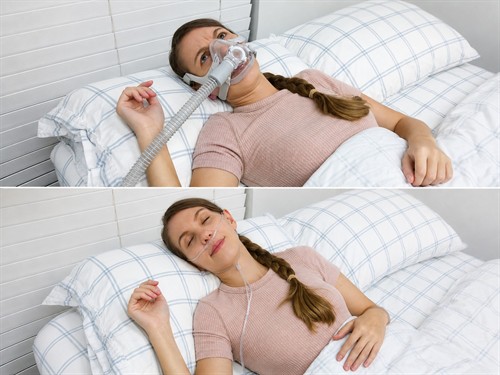


.jpg "POxT vs. CPAP Visual Comparison")
.jpg "POxT vs. CPAP / Inspire / Oral Appliance Therapy - for the Treatment of Sleep Apnea")
Rep/Contact Info
Dr. Richard Herstein M.D.
Founder and Clinical Director
- Phone: (734) 239-4189
- Cell Phone: (734) 239-4189
- Send an Email
- 821 S.E. Ocean Blvd., Suite C Stuart FL 34994
